
San Francisco Architect Insurance

The Benefits of Working with an Experienced Broker

San Francisco Architect Insurance

San Francisco architect insurance is complex. From high-value construction projects, to seismic risks, to aggressive litigation trends, Bay Area architecture firms often discover that finding the right insurance is far more complicated than purchasing a standard business policy online.

That is why working with an experienced insurance broker who understands architect insurance — and the San Francisco market specifically — can make a major difference in both protection and long-term business stability.

Unique Risks for San Francisco Architects

Architects carry professional responsibilities that create exposures beyond those of many other businesses. Even a small design oversight can lead to allegations of:

  • Construction delays
  • Cost overruns
  • Structural deficiencies
  • ADA compliance issues
  • Water intrusion or building envelope failures
  • Life safety concerns
  • Contract disputes between project stakeholders

In California, and particularly in the Bay Area, claims involving construction defects and professional negligence can become extremely expensive. A single lawsuit can involve developers, engineers, contractors, subcontractors, and architects all at once.

An experienced broker understands these risks and helps structure policies that address the real-world exposures architects encounter every day.

Professional Liability Coverage is Critical

The centerpiece of most architect insurance programs is professional liability insurance, also known as errors and omissions (E&O) coverage. This coverage helps protect architects when claims arise alleging negligence, design errors, omissions, or failure to meet professional standards.

However, professional liability policies are highly nuanced. Coverage differences between carriers can include:

  • Contract review provisions
  • Defense costs inside vs. outside limits
  • Pollution exclusions
  • Cyber-related design exposures
  • Coverage for subcontracted consultants
  • Prior acts coverage
  • Project-specific exclusions
  • Residential construction limitations

A generalist insurance agent may not recognize these distinctions. An experienced architect insurance broker can compare policy language carefully and explain how different carriers approach risk.

This becomes especially important in San Francisco, where many projects involve mixed-use developments, historic renovations, multifamily housing, complex urban construction, and extremely high construction costs.

San Francisco Construction Risks are Unique

The Bay Area presents challenges that are not always present elsewhere in the country.

Some of the most important include:

Seismic Exposure

Earthquake risk affects nearly every aspect of construction and design in the region. Insurers may scrutinize firms involved in structural work or large commercial projects more heavily than firms in lower-risk regions.

Dense Urban Development

San Francisco projects often involve tight construction sites, neighboring property exposures, and extensive permitting requirements. These conditions can increase the likelihood of disputes and claims.

High Construction Costs

Construction defect claims in the Bay Area can become extremely expensive simply because labor and material costs are so high. Even relatively small issues can lead to six-figure losses.

Evolving Regulations

California building standards, energy regulations, accessibility requirements, and environmental rules continue to evolve. Architects must stay compliant while also protecting themselves contractually.

A broker who regularly works with architects in California is far more likely to anticipate these challenges before they become insurance problems.

The Importance of Contract Review

One of the biggest mistakes architects make is focusing only on the insurance certificate instead of the underlying contract language.

Project contracts frequently include problematic provisions such as:

  • Broad indemnification clauses
  • Unrealistic standards of care
  • Duty-to-defend requirements
  • Uninsurable guarantees or warranties
  • Excessive insurance requirements

An experienced broker who specializes in architect insurance can help firms negotiate more reasonable terms before signing agreements.

Architects Often Need Multiple Policies

Professional liability insurance is only one piece of a complete insurance program.

Depending on the firm’s size and operations, architects may also need:

  • General liability insurance
  • Cyber liability coverage
  • Workers’ compensation
  • Commercial auto insurance
  • Employment practices liability insurance (EPLI)
  • Umbrella liability coverage

An experienced broker helps coordinate these policies so that your firm does not have critical coverage gaps. At Mighty Oak, we are experts in all the types of policies recommended by the American Institute of Architects (AIA).

A Cheap Policy can become an Expensive Mistake

Many architects understandably try to control insurance costs, particularly smaller firms and independent practitioners. But choosing coverage based solely on price can create serious problems later.

Lower-cost policies sometimes contain:

  • Restrictive exclusions
  • Lower-quality claims handling
  • Limited defense coverage
  • Reduced coverage for residential work
  • Narrow definitions of professional services

When a claim occurs, those differences matter enormously. An experienced broker helps architects evaluate value — not just premium.

Claims Advocacy Matters

One of the most overlooked benefits of working with a knowledgeable broker is claims support.

When professional liability claims arise, architects often face stressful situations involving attorneys, project owners, contractors, and deadlines. A broker who understands architect claims can help:

  • Report claims properly
  • Coordinate with carriers
  • Preserve coverage
  • Assist with documentation
  • Advocate during disputes

That guidance can be invaluable during a high-pressure claim.

Choosing the Right Insurance Partner

Not every insurance broker understands design professionals. Architects should look for brokers who:

  • Regularly work with architecture and engineering firms
  • Understand California construction risk
  • Have access to multiple professional liability markets
  • Review contracts and risk exposures
  • Understand project-specific coverage needs
  • Can explain policy language clearly

In a market as complex as San Francisco, experience matters. Here at Mighty Oak, we have this experience. We do more than sell insurance policies. We become long-term risk management partners who help protect the reputation, finances, and future of your architecture firm. Our specialty is San Francisco architect insurance so that your don’t have to. Let your broker focus on your insurance, so that you can focus on your work.


Contact a broker today to get started!

Bar Insurance in California

bar insurance in california

Operating a bar is challenging enough. But for venues that are 100% alcohol with no food sales, securing insurance can be unexpectedly tricky. These establishments are viewed by insurers as higher-risk operations, which narrows the pool of available carriers and drives up premiums. But we can help! Here is how to find bar insurance in California.

Why Bars Are Hard to Insure

Insurance companies evaluate risk based on how much alcohol is served and consumed. Bars without food are often seen as presenting a greater likelihood of overconsumption, intoxication, and late-night incidents. As a result, insurers frequently charge more—or decline coverage altogether—because alcohol-related claims can be severe and costly.

Liquor-related incidents—such as fights, injuries, or drunk driving accidents—can expose a bar to lawsuits claiming the bar should be held liable for harm caused by intoxicated patrons. For this reason, many big-name insurers have stopped offering policies to bars altogether.

If your business makes 100% of its revenue from alcohol sales (no food sales), that trend is even more pronounced, because insurers tend to favor businesses that generate a meaningful portion of revenue from food. Many insurers will also refuse to insure bars that employ security guards or bouncers due to an increased risk of physical altercations.


Core Insurance Coverages Required

Bars in California typically need a package of coverages, not just a single policy. The most critical include:

1. Liquor Liability Insurance
This is the cornerstone policy for any alcohol-serving establishment. It covers legal fees, settlements, and damages if a patron causes injury or property damage after being served alcohol. This coverage is not included in general liability policies, leaving businesses exposed if they don’t purchase it separately. It may also be a requirement in your lease, or from a licensing body.

2. General Liability Insurance
Covers non-alcohol-related incidents such as slips and falls and injuries occurring on the premises. Your broker should also make sure that Assault and Battery Coverage is included on the policy, in case a fight breaks out on the premises.

3. Property Insurance
Protects the physical bar, equipment, and inventory from risks like fire, theft, or vandalism.

4. Workers’ Compensation
Required in California for any business that hires employees. This covers all varieties of workplace injury.

5. Excess / Umbrella Liability
Many landlords and licensing bodies require higher limits through umbrella policies, in case a claim exceeds $1m.


Why Specialized Brokers Matter

Because of the complexity and shrinking insurance market, it is crucial to work with a broker who specializes in bars and nightlife. At Mighty Oak, we specialize in tough-to-place insurance, including bar insurance in California.

We know how to:

  • Access niche carriers that still write liquor-heavy risks
  • Structure policies to avoid dangerous coverage gaps (e.g., liquor liability or assault & battery exclusions)
  • Present your business in the best possible light to underwriters (emphasize your training programs, employee safety, security, operations)
  • If your carrier non-renews your policy for any reason, we can efficiently replace it with a new carrier.
  • Shop around for you to ensure that you are always paying the most competitive price, while still getting the coverage you need.

Without that expertise, bar owners can easily end up either underinsured (and exposed to lawsuits) or overpaying for inadequate coverage. Insurance for alcohol-serving businesses is not a simple checkbox—it’s a highly technical, evolving part of the industry. One misstep can leave a business financially vulnerable.


Contact Us

Bar insurance in California can be difficult to obtain, but we are here to help! Though there might be fewer options, stricter underwriting, and higher costs, we know how to get it done right and for a fair price.

Contact us to learn more or get quotes!

How to properly insure a restaurant with bottle service or high liquor sales

If you operate a restaurant where bottle service or high liquor sales are a key part of your concept, you may find it more challenging to find insurance. While standard restaurants can often acquire low-cost insurance from big-name insurers, restaurants with bottle service or high liquor sales are regularly declined by these same carriers. But it certainly is not impossible for such restaurants to find good insurance! You just have to work with a broker who knows how to get it done.

Why is it more challenging to find insurance for a restaurant with bottle service or high liquor sales?

Insurance companies don’t really care about the word “restaurant”, they care about risk profile. And bottle service pushes you toward a riskier category in their eyes. Insurers rank restaurants along this scale:

  • standard restaurants (least risky)
  • bars (medium risk)
  • night clubs (riskiest)

Insurers (especially the standard, big-name insurers that usually offer low-cost insurance to restaurants) will often group restaurants that offer bottle service into the “night club” category, even if the restaurant is not a night club. These insurers are concerned that bottle service or high liquor sales will lead to more frequent claims stemming from intoxicated clients, late-night activity, security incidents, etc. These insurers are nervous about this even if your restaurant is up-scale, well-managed, and completely safe. For this reason, many of these insurers will simply decline on the front-end.

Oftentimes brokers who are less experienced in commercial insurance will only apply with these conservative, big-name insurers. When these carriers inevitably refuse to send a quote, the broker reports to the restaurant owner that there just aren’t any insurance options available. But this is not the case! There are many insurers that specialize in just this type of restaurant. You just need to work with a broker who knows where to look.

How to properly insure a restaurant with bottle service or high liquor sales

1) Know where to look.

Here at Mighty Oak we specialize in insuring business owners who would normally struggle to find insurance. This means that we know to look beyond the big-name insurers (who are very good at saying “no”) and instead explore the broader insurance market, which includes insurers that specialize in all varieties of restaurant insurance, from bars to Michelin Star restaurants to nightclubs, and everything in between. Our contacts with underwriters at a wide variety of insurers allows us to move quickly, so that your restaurant opening is not delayed due a failure to acquire insurance in a timely fashion. And though it’s true that restaurants with bottle service are likely to pay more for insurance than a pizza shop, we will always shop around to make sure you get the most competitive pricing available!

2) Know which coverages are crucial.

A standard “Business Owner Policy” for a restaurant will automatically include liability coverage, and will insure the contents of the restaurant (furniture, computers, food). This is a great start, but it isn’t the whole picture. For a restaurant offering bottle service, “liquor liability” is a critical part of the policy that many brokers will overlook. This coverage specifically insures your business in the event a claim stems from an intoxicated client. Making sure the policy includes this coverage prevents the carrier from denying a liquor-related claim.

Another important coverage to look for is “assault and battery coverage”. In the event (for example) a rowdy client picks a fight with a staff member, assault and battery coverage can pay for your business’s legal defense, medical bills, and settlements. This is a crucial coverage for establishments with high liquor sales, as well as restaurants that employ security or operate in higher-risk areas. You need to work with a broker who knows to add these features to your policy.

Bottom line

It is certainly not impossible to find insurance for a restaurant offering bottle service. Yes liquor sales, a late-night crowd, and the location are all factors that might make finding insurance more challenging (especially for less-experienced brokers), we know how to navigate this market and get your restaurant insured. And we won’t offer you a quick policy that’s missing key ingredients, because our primary concern is to make sure your business is insured properly. We know where to find the right policies, we know what to look for in these policies, and we know how to explain the coverages in a simple and straightforward way so you know what you’re buying.

Reach out today to get quotes!

Finding the right insurance for an earthquake retrofit contractor

It can be tricky to find the right insurance for an earthquake retrofit contractor, but we can help!

A general contractor recently called to ask if we can help with his insurance. He is a licensed earthquake retrofit contractor who has been working in construction for decades. He was struggling to find insurance that would actually cover his core operations: earthquake retrofit and foundation repair. When he met us, he had just purchased a policy that officially offered him no coverage for his main services.

Here was the message he had just received from his current broker:

Per our discussion, the policy that you purchased with us doesn’t cover foundation repair or earthquake retrofitting of any type.  Unfortunately we must cancel your policy immediately. We will be unable to provide a replacement policy for you. We are sorry for the inconvenience.

At that moment the contractor had many retrofit jobs running simultaneously across the Bay Area, so this insurance problem had to be corrected immediately.

How did he find himself in this situation? The reason is because many brokers who work with contractors use instant-quoting portals that generate quick and cheap insurance quotes. These quotes are handy because of the speed and price, but they are usually riddled with exclusions. For a contractor who performs standard remodel work, these sorts of quotes might be the perfect fit. But for an earthquake retrofitter, the exclusions render these cheap quotes worthless.

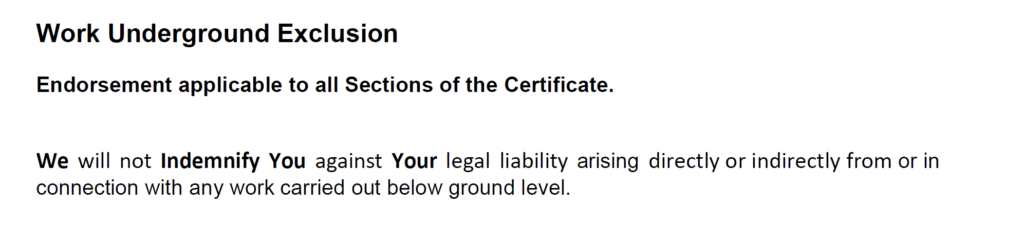
Here’s an example of such an exclusion:

Even though that exclusion for seismic retrofitting work seems pretty obvious, it’s still easy to miss it if the broker doesn’t read the quote carefully. Sometimes the exclusions are even more subtle, like this exclusion, which is often buried on page 80-something of the policy:

The contractor who called us had purchased a cheap policy that his broker had found for him instantly, via a portal that did not ask too many questions. The broker did not review the exclusions before starting the insurance, and carelessly sold a low-priced policy that contained an exclusion for all kinds of retrofitting work. A few weeks later, when the contractor was reviewing his new policy, he discovered the exclusion and called his broker. Only then did the broker realize that the insurance he had sold was worthless. The contractor realized, to his dismay, that he had been operating essentially uninsured for the past three weeks.

We were able to fix this problem for the earthquake retrofitter because we are experts at construction insurance of all kinds. We always read through the policy language before we put a new policy into force, and we know which exclusions to look for. We also know which insurers specialize in specific areas of construction which are often excluded on standard policies, such as earthquake retrofitting, bridge work, utility work, new construction, and remodel work performed for large HOAs. We made sure that the retrofitter got a liability policy that insured his actual operations and did not include any worrisome exclusions, so he could continue with his jobs uninterrupted.

If you are an earthquake retrofit contractor, or any kind of contractor who has struggled to find proper insurance, please reach out. We can help with general liability, workers comp, commercial auto, bonds, and any other kind of construction-related insurance.

Most importantly, we will make sure the job is done right the first time.

Insuring a Coworking Space (A True Story)

An owner of a business that offers coworking space asked us recently to quote his insurance because he was planning to open a second location.

What we uncovered through working with him was an alarming reality that applies to coworking businesses across the country: their insurance might be based on a falsehood, and therefore worthless.

His business had been operational for about a year when we met him. His previous agent had written him a Business Owner Policy (BOP) with a well known standard insurance carrier.

This policy provided ample coverage for his business at $2m of liability coverage per occurrence and more than $550,000 of property insurance for a premium of approximately $2,000 per year. This seemed like an incredible deal.

He was planning to open a second location nearby, so it felt like an opportune time to shop his insurance out and get competing quotes for him.

Our thorough check of the “standard” insurance market turned up some worrying results:

  • Travelers – Declined due to class of business
  • CNA – Declined due to class of business
  • Liberty Mutual – Declined due to class of business
  • Allied/Nationwide – Declined due to class of business
  • USLI – Declined due to class of business
  • Guard – Declined due to class of business

Each of these carriers informed us that they have a strict rule not to underwrite coworking spaces at all. This perplexed us. The client’s carrier, seemed willing to provide insurance for our client, while all other similar carriers declined. But since his carrier was apparently willing, we resolved to simply update his existing policy.

Initially the carrier was willing to add the second location and meet the insurance requirements for his new location.

However, when we called to push the changes through, his carrier informed us that additional underwriter review had been triggered.

After only a few minutes of review the underwriter explained that we had a problem: the original agent had submitted an application that had listed their services as Answering Service – nothing more. While answering services are one of the services that this business offers, they also offer many more including coworking space rentals, PO box rentals, desks by the hour and virtual assistant services. 

It was for this reason that his carrier determined to cancel his policy for both locations – effective only a few weeks before he was set to open his new location!

While we searched for a replacement for him, he searched on his own and asked his coworking business colleagues for help. Throughout this process we both learned that most coworking space businesses are insured with similar standard carriers, including those previously listed.

This led to an alarming discovery. If what these carriers told us is true – that they do not insure coworking rental businesses – then it would appear that anyone who owns a coworking business AND has a policy with these carriers may not be properly insured.

Inexpensive insurance may seem attractive on the surface. But if your insurance company refuses to pay a claim in a critical moment, that insurance is a worthless contract. Your business might as well be uninsured when it comes to coworking space.

In the event of a bad claim, especially one that touches the coworking aspect of the business, coverage may be denied or significantly reduced if the insurance company does not have a clear picture of what your business actually does.

In our example, our client’s previous agent told the carrier that the client was only an answering service, NOT a coworking space. Therefore the carrier misunderstood the nature of the business they were insuring, and unknowingly offered insurance to this business against their own underwriting rules.

In the end, we were able to satisfy our client’s insurance requirements and get him a policy with a different carrier that was comfortable insuring coworking spaces (and we made sure the carrier was aware of all the facets of his operation). If it turns out that your insurance company thinks you are an answering service (or some other incorrect class of business) instead of a coworking space, drop us a line. We can help you get the insurance you need to actually cover your operation – coworking spaces included.

We have the knowledge of the market to know which insurance companies actually want to insure coworking spaces. These companies often require more follow-up, detail, and interaction with the client than most insurance agents are willing to provide. We are willing to put in the time necessary to make sure our clients’ insurance gets done correctly. 

Vendor Check

One of the best ways to protect your business is to make sure your sub-contractors and 1099 employees are properly insured.

It is crucial that your vendors, 1099s, and subcontractors be properly insured. If they ever accidentally cause damage to a person or property, fail to live up to a client contract, or suffer an injury on the job, their insurance situation could have a serious impact on your business. Ensuring that they carry [sg_popup id=”246″ event=”click”]General Liability[/sg_popup], [sg_popup id=”249″ event=”click”]Workers Comp[/sg_popup], [sg_popup id=”251″ event=”click”]Commercial Auto[/sg_popup], and any other type of insurance you deem necessary, is the best way to protect your business.

After all, if your uninsured sub-contractor makes a costly error or injures someone, you will likely pick up the tab. For example, ABC General Contractor brings in a subcontracted electrician to install some wiring in a remodeled house. This electrician accidentally backs his truck into the house, causing thousands of dollars of property damage. The homeowner sues ABC General Contractor, who discovers too late that the electrician did not carry Commercial Auto coverage. The general contractor will likely foot the bill, and try in vain for years to get repayment from the electrician. Had the G.C. enforced strict insurance requirements on his subcontractors, the insurance company would have likely paid the claim.

Don’t take on the financial risk of having to pay for others’ mistakes! Make sure your subcontractors and 1099s are fully insured. Otherwise they transfer all the risks of running their operation onto your books.

An even more common example: a sub-contracted painter is brought on-board by a general contractor and paid in cash (no written contract, no insurance requirements). The painter’s assistant falls off a ladder and breaks his legs, resulting in $65,000 in medical bills. Since there was no written contract and no Workers Comp insurance in place, the painter’s assistant decides to sue the general contractor for repayment of his medical bills (the G.C. is more likely to have the money to pay than the painter). The general contractor is forced by the court to pay the bills, and fined an additional $100,000 for operating without Workers Comp! Even though the painter’s assistant was not really the G.C.’s employee, the G.C. ended up paying the entire mount, all because the G.C hired an uninsured subcontractor. If the G.C. had required his subcontracted painter to carry Workers Comp, the insurance company would have paid the bills for that employee, and a lwsuit could have been avoided. Instead the G.C. hired the painter “off the books”, and it cost him dearly.

Every subcontractor with even one employee must carry Workers Comp. Any sub with a truck must carry Commercial Auto. And every sub need a General Liability policy. A general contractor who requires his subs to carry these policies can sleep soundly knowing that someone else’s mistake won’t cost the G.C. his whole business.

Our goal is to make sure your business is properly protected, without disrupting business operations in any way. If you have a sub-contractor who doesn’t carry insurance, or you just want to check to see if he/she does, reach out to Mighty Oak. We can help you make sure your subs are properly insured.

How to Properly Insure a Mixed Use Apartment Building

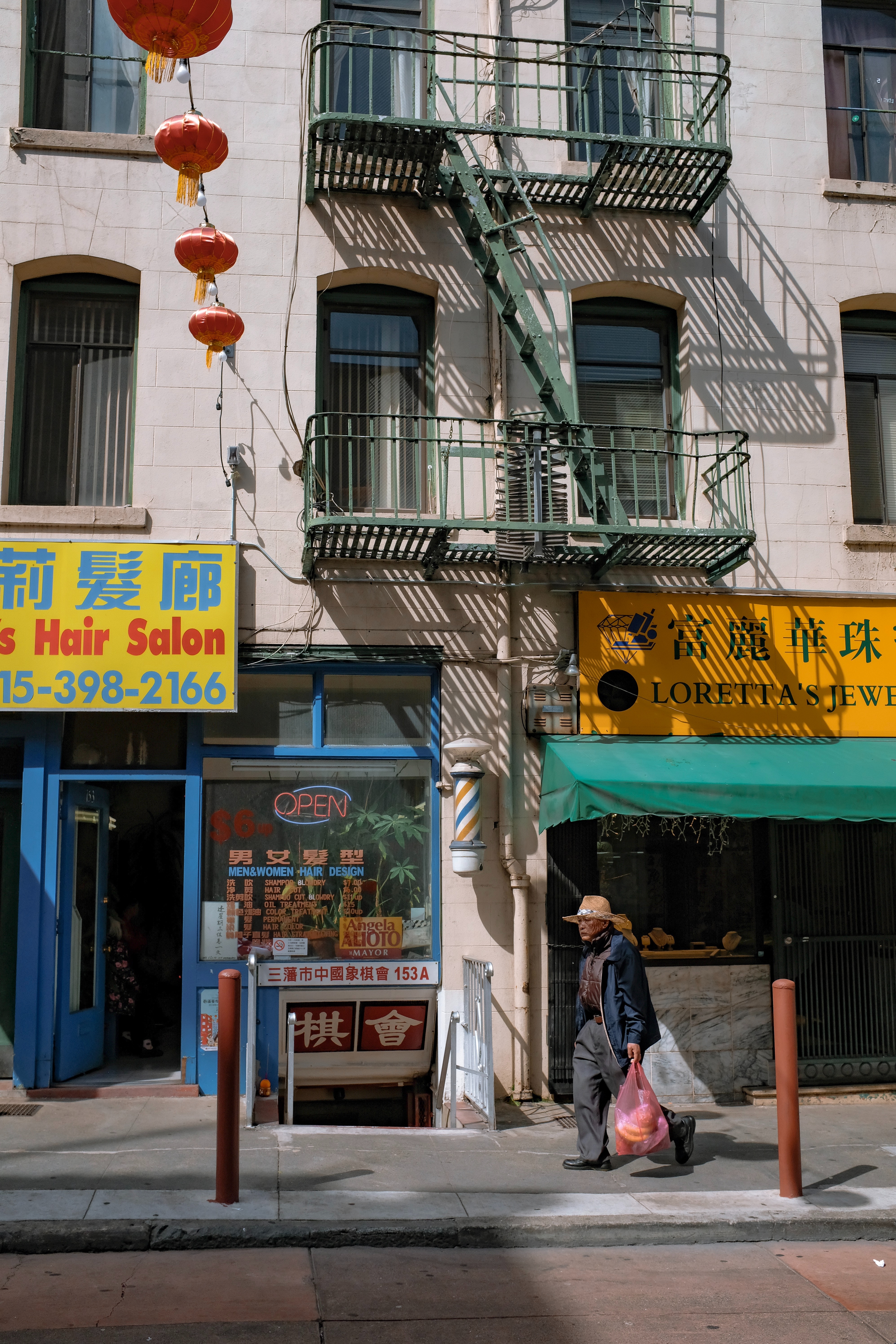
A mixed use apartment building in Chinatown, San Francisco

What is a “mixed use” property?

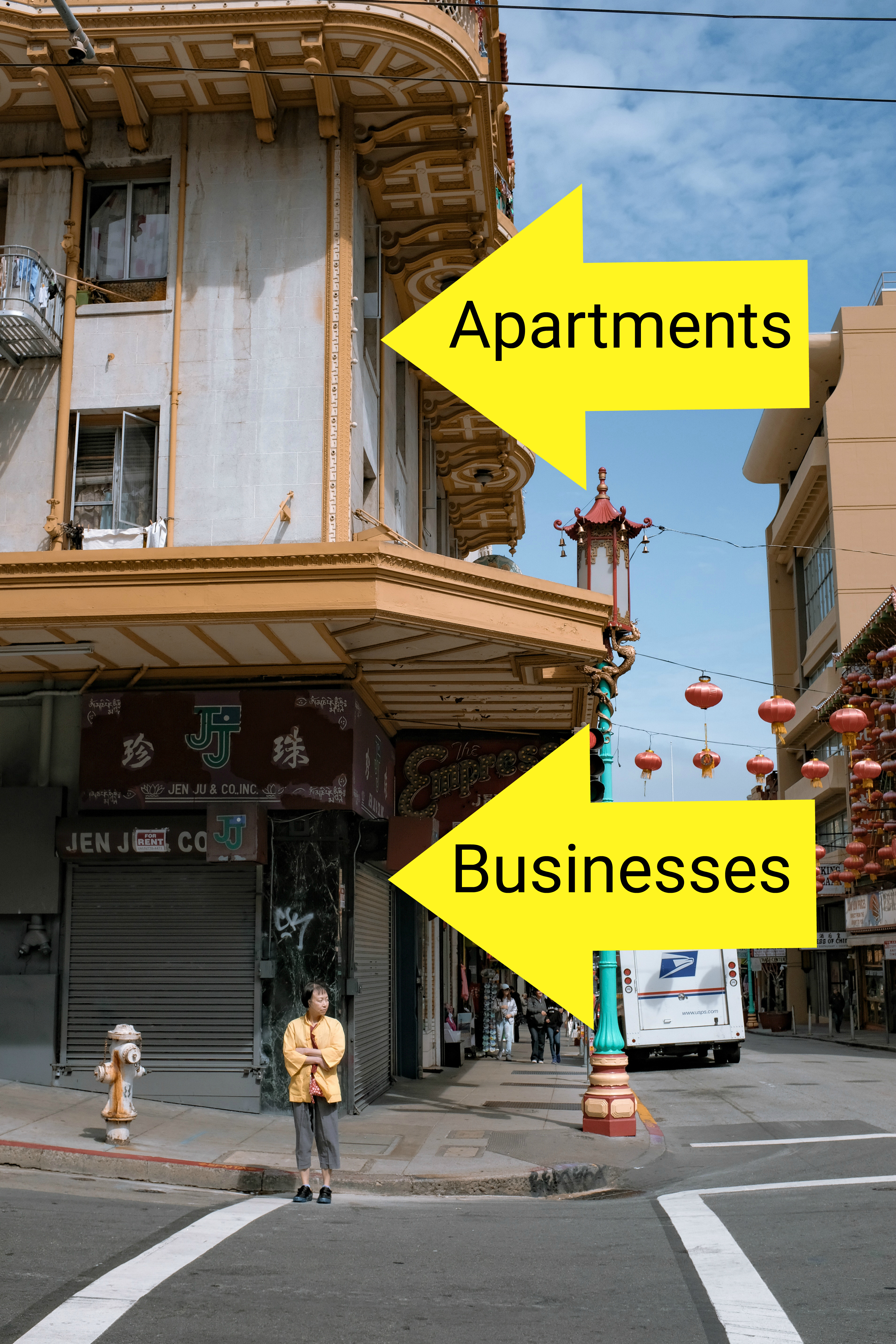
A building is “mixed-use” if it has businesses on the street level and apartments up above. Really, a mixed use building is any building that serves multiple functions. It might be part office and part retail, or part government building and part cafe, or part residential and part commercial. Walk around any major city – such as San Francisco – and you’ll see these types of buildings everywhere, especially mixed use apartments. Here at Mighty Oak, we specialize in mixed use property insurance.

Another mixed use apartment building in Chinatown, San Francisco

The Challenge of Insuring Such a Building

Mixed use apartments, which generally feature apartments on top and businesses on the street level, are ubiquitous in San Francisco. They also happen to be a real pickle to insure properly. Every occupant of this building needs a different kind of insurance: the business owner needs to insure his business, the residential tenant needs to insure his belongings, and the building owner needs to insure the entire property.

In the event of a disaster like a fire, it is crucial that all three of those areas (business, tenant’s belongings, and the building itself) have policies that will pay out! Often times the business owners, tenants, and landlords aren’t entirely clear on which types of insurance they actually need, or what it means to be “properly covered”. For example, if a building owner insures his building, it is important for the business owner tenant to understand that his business property is likely NOT covered at all.

Often these buildings contain many different tenants and businesses that each have their own unique insurance needs. It is absolutely essential to work with a competent insurance broker who can provide insurance options for the business owners, the tenants, and the landlord. Ideally this broker could also educate the whole crew on which occupants are responsible for which insurance pieces.

This iconic corner in North Beach, San Francisco is full of mixed use apartment buildings.

How to Properly Insure a Mixed Use Building

First, we should consider the building itself. Each building needs to have its own Landlords Policy, which will cover the actual building. As the name of the policy implies, this piece is the landlord’s obligation to purchase (and it is the landlord who gains the protection). If the building is damaged or destroyed, this policy will pay back the owner of the property for repairs. Sometimes when an older building is damaged, the city steps in and demands that the property be brought up to code (such as a mandatory earthquake retrofit). This insurance policy can help cover that cost as well. It will even cover lost income, since the owner may lose some rent payments if tenants have to evacuate during repairs.

This policy is crucial for the owner in other ways. For example, if a visitor slips in the stairwell and decides to sue the property owner, this policy will pay the legal bills and damages. If a tenant decides he’s been wrongfully evicted and chooses to sue, this policy may cover the landlord’s legal fees. In other words, the building is the landlord’s business, so it should be insured in almost all the same ways a business would be insured: protect the property itself, protect the owner’s income, and protect the owner from lawsuits.

A typical mixed use property, with apartments upstairs and a bar downstairs. The owner must insure this entire property, since he owns the whole building.

Now that the building itself is covered, the rest of the building’s inhabitants (both residential tenants and business owners) need their own separate insurance. Take the example below: we see that the red units are residential units and the blue units are retail commercial units.

Each occupied unit needs its own insurance coverage. But wait – haven’t we already insured the building? Why should each tenant have to insure their own unit? Actually the tenants do not need to insure any part of the building itself, but rather their own belongings inside their unit. The Landlord’s Policy will not cover any of the tenant’s belongings, and in the event of a fire, the tenant will not be reimbursed for lost items unless he carries his own separate Renter’s Policy.

A Renter’s Policy is also known as “contents coverage”, or insurance coverage that does not cover the structure itself, but instead the contents of each unit. Every residential tenant can cover his own belongings without having to pay for coverage for the building that he does not own. These policies are designed to protect the tenant in case something like a burst pipe destroys their belongings. A good Renter’s Policy can even cover a tenant’s liability, say if the tenant accidentally starts a fire that destroys the neighboring tenant’s belongings. The combo of a Landlord’s Policy and Renter’s Policy ensures that the building itself and all the stuff inside it are protected from accident or disaster.

What about the businesses on the ground floor? They are also tenants, but they don’t live in their unit. These commercial tenants need policies that cover their:

Business Property – Covers their equipment, tools, and other contents of the commercial unit, in case they need to be replaced after an accident or disaster.

General Liability – Covers the business owner in case a customer gets injured or someone else’s property is damaged during the normal course of business. If someone slips inside the business and decides to sue the business owner, this policy will pay his legal bills.

Workers Comp – If an employee is injured on the job, this policy will pay the medical bills. This type of insurance is legally required for any business that has at least one employee.

Just like the residential tenants, these business owners do not need to cover any part of the building itself, but only their own businesses inside their unit

This is why a mixed use property is the perfect intersection of personal insurance and commercial insurance, all in one property. A good broker can work with the entire building to cover the owner and every tenant in a way that protects everyone without forcing anyone to pay for insurance they don’t need.

How to Properly Insure a Handyman

A professional handyman has to be pretty adaptable! Installing a set of cabinets, repairing some drywall, painting a mailbox, realigning a garage door, pouring some concrete, sanding a porch, assembling furniture, removing a door frame, building a shelving unit, remodeling a living room, unclogging a drain, hauling some junk… it’s all part of the job. The more skills a handyman can master, the more jobs he can say yes to.

A handyman’s business insurance needs to be just as adaptable. The more jobs a handyman can take on, the more varied the risks that come with those jobs, and the handyman’s policies MUST cover all those risks in order to be effective (otherwise what’s the point of insurance?). Therefore it is crucially important that the handyman work closely with a business insurance broker to craft an insurance policy that is tailored to the handyman’s actual needs. Being “properly covered” doesn’t mean just piling on more and more insurance (with higher commissions for the broker); it means creating a set of policies that fit a client’s business risks exactly.

“Do I really need insurance?”

The first question many handymen (and other business owners) ask is, “Do I really need insurance?” A good way to answer that question is to think about the risks a handyman takes on just by doing his job, AKA the every day accidents that could result in the handyman having to shell out lots and lots (and lots) of money. A newly installed air conditioning unit could fall and injure a child. A handyman’s assistant could slip off a ladder and break his leg. The handyman could get T-boned while driving his truck to a job site. A client could trip over a peeled-up carpet and decide to sue. A whole set of new tools could be stolen from the truck. And many many more.

These sorts of accidents can happen to anybody, even the most skilled operators. They are the risks of doing business. What insurance does is transfer that risk off of the handyman’s balance sheet and onto the balance sheet of an insurance company. One single lawsuit or car accident can put even a well-established handyman out of business. One theft can set a handyman back for months. By purchasing policies designed to cover these mishaps, the handyman can sleep at night with the knowledge that no matter what goes wrong, he won’t have to pay for the damage. That is, as long as the risk is covered in the policy.

This is why it’s so crucial to work with an insurance broker who isn’t just trying to close a deal quickly for a fast buck, but instead wants to learn every facet of the handyman’s business before agreeing to write the insurance policies. The cost and scope of the insurance will depend on what kind of work the handyman does, whether he has employees, who his clients are, and how large his operation is. If the handyman does more dangerous work, the cost will be higher, but so will the coverage. All of this should be discussed before the broker even attempts to get quotes.

One added perk of insurance: Many clients require certificates of insurance before work can begin. These clients may include apartment complexes, bank-owned properties, clients asking for electrical or plumbing work, and clients who simply want to ensure that if an accident does occur on their property, the handyman will have the resources to pay for the repairs. For these clients, a handyman without insurance is simply unhireable. Therefore proper insurance coverage could lead to more (and better paying) jobs.


Remember: Even if you are very careful and diligent at job sites, accidents can still happen. Insurance protects you and your business from outcomes that are out of your control.


“What types of insurance do I need?”

The types of insurance a handyman might typically need include:

[sg_popup id=”246″ event=”click”]General Liability[/sg_popup] – Protects him from paying repair costs in the event that the handyman accidentally harms a customer’s home, appliances, or other property. If the customer himself is injured in an accident, this insurance can cover small medical bills regardless of who was at fault, and large medical bills if the handyman is found to be liable. Should the accident lead to a pricey lawsuit, this policy could cover all the defense costs. A General Liability policy can even pay out if there is a dispute over the handyman’s finished work – this is known as “Completed Products Coverage”. Since so much of his work is performed within a customer’s home, a professional handyman must have protection from lawsuits of all varieties. A G.L. policy provides just that, so a handyman can do his job without worrying that one mistake will cost him his business.

Coverage of tools and equipment (also known as [sg_popup id=”557″ event=”click”]Inland Marine[/sg_popup]) – If his tools or equipment are stolen, damaged, or lost, this policy will cover the loss. Imagine the cost to replace an entire set of tools if they are destroyed by fire or some other accident. Inland Marine will not only pay to replace the set, but it may also cover lost income if the accident forced the handyman to suspend his operations for a time. And to top it all off, Inland Marine coverage follows the handyman wherever he takes his equipment (unlike a [sg_popup id=”256″ event=”click”]Commercial Property[/sg_popup] policy, which covers only equipment and property that stays in one place). Since most handymen do a lot of traveling with their tools, every piece of a handyman’s equipment should be insured with an Inland Marine policy.

[sg_popup id=”249″ event=”click”]Workers Comp[/sg_popup] – If the handyman has employees, this insurance is legally required. It covers medical bills, lost wages, and even death benefits if employees are injured or killed on the job. The more dangerous the work, the more expensive this policy is likely to be. But don’t take that to mean it’s a policy that can be skipped. Aside from the legal requirement, Workers Comp is an absolutely crucial policy for a handyman to carry, just for the sake of his business. Given the strenuous, physical nature of the work, the threat of accidental injury is always present. Workers Comp will not only cover the medical bills for the employees (and the owner if he wants to be included), but it also protects the owner from lawsuits.

[sg_popup id=”251″ event=”click”]Commercial Auto[/sg_popup] – Since being a professional handyman involves the daily operation of a work vehicle, having a strong Commercial Auto policy in place is vital. Whether driving to a job site, picking up supplies, backing into a customer’s driveway, or popping out for coffee, every moment spent on the road exposes a handyman to risk. Without a Commercial Auto policy in place, the handyman is on the hook for any harm that comes to people or property as a result of his vehicle (whether the business owner or his employees are driving). If a handyman’s truck backs into some scaffolding, gets T-boned at an intersection, rear-ends a car in traffic, or strikes a pedestrian, this crucial coverage can pay for the damages. It can cover medical bills, replacement of damages property, legal fees, and even repairs to the handyman’s own vehicle should he be hit by an uninsured driver.

The Shield

These policies combine to form a shield that protects a handyman from just about any catastrophe that could strike his business: injured workers, a car accident, a fire at the shop, theft of tools, damage to a customer’s property, a natural disaster, and even lawsuits from dissatisfied customers. This is what we call a “well-tailored” policy, rather than “one size fits all”. It doesn’t just tack on a bunch of insurance a handyman doesn’t actually need; instead it is designed specifically for a handyman, and covers exactly the risks he might face.

To compile such a perfectly tailored policy, it’s usually best to work with a business insurance broker, because brokers can search the whole market for the best deal. Brokers have access to insurance carriers that specialize in handymen and tradesmen of all kinds.

Want to find the right insurance for your business? Drop us a line! You can speak to broker, ask a question, or even suggest a future blog post.